
CALL OR CHAT 24/7 (702) 570-9287
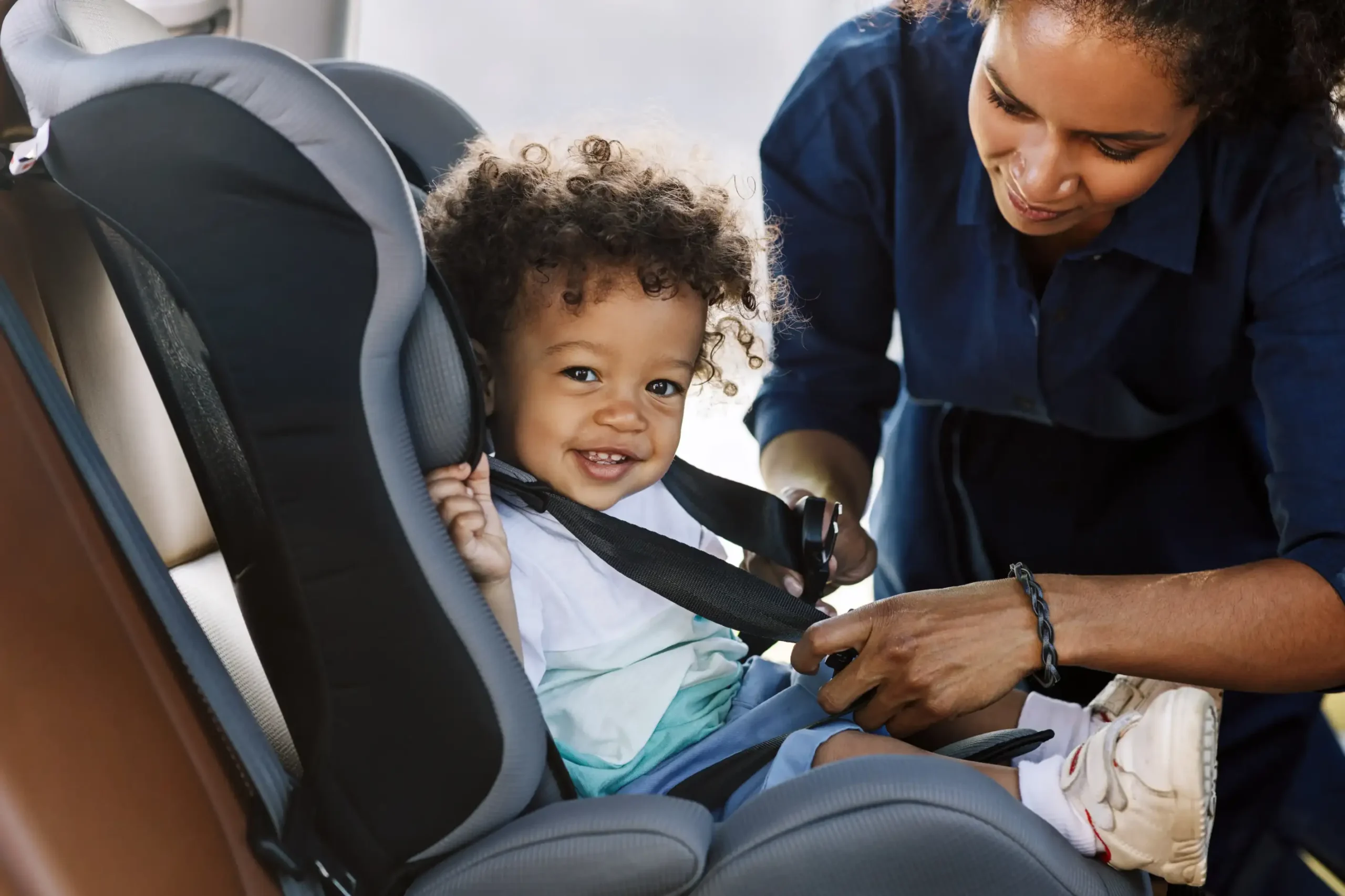
Nevada Car Seat & Booster Seat Laws
Protecting children during vehicle travel is one of the most important responsibilities for Nevada parents and caregivers. State law establishes specific requirements for child restraint systems based on age, weight, and height to ensure young passengers receive appropriate protection in the event of a car accident.
Nevada’s Car Seat Regulations
Nevada Revised Statutes (NRS) 484D.495 establishes the legal framework for child restraint systems in the state. Under this statute, any person who operates a motor vehicle on a highway must secure children under six years of age in a child restraint system approved by the U.S. Department of Transportation.
The law applies to all vehicles driven on Nevada roads, including cars, trucks, and SUVs. Our lawyers emphasize that regulations for car booster seats go beyond minimum legal requirements. Parents should consider both legal obligations and safety best practices when selecting and using child restraint systems for their young passengers.
Child Car Seat Requirements by Age and Size
Proper child restraint use dramatically reduces the likelihood of serious injury or death in motor vehicle crashes. According to recent data from the National Highway Traffic Safety Administration, properly installed car seats reduce the risk of fatal injury by 71% for infants younger than 1 year old.
Toddlers between the ages of one and four experience a 54% reduction in fatal injury risk when secured in car seats while riding in passenger vehicles. Studies involving light trucks show comparable protective benefits, with reductions of 58% and 59% in the risk of fatal injury for infants and toddlers, respectively.
Birth-12 Months
Infants should ride in rear-facing car seats from birth until at least one year old. Rear-facing seats better protect a baby’s head, neck, and spine in sudden stops or crashes. Parents should review the weight restrictions on car seats specified by manufacturers, as each seat model has minimum and maximum weight limits.
1 to 3-Year-Olds
Toddlers between one and three years old should continue using rear-facing car seats until they exceed the manufacturer’s weight or height limits. Once children outgrow their rear-facing seats, they can transition to forward-facing car seats with five-point harnesses.
Forward-facing seats distribute crash forces across the strongest parts of a child’s body. Parents must secure the seat using both the vehicle’s seat belt and the top tether anchor for maximum protection.
4 to 7-Year-Olds
Children in this age range typically use forward-facing car seats with harnesses or booster seats, depending on their size. Nevada law requires children under six years old to use child restraint systems.
Parents selecting car seats for 6-year-olds should consider the child’s weight and height, not age alone. Manufacturers’ height and weight guidelines for booster seats help determine when a child can safely transition from a harnessed seat to a belt-positioning booster.
8 to 12-Year-Olds
Children in this age group often ride in belt-positioning boosters until they can properly fit in vehicle seat belts without a booster. Booster seats for 8-12-year-olds elevate children so that lap and shoulder belts rest correctly across their bodies.
A child can stop using a booster when they weigh 40+ pounds, are 4 feet 9 inches tall, and can sit with their back against the vehicle seat, with knees bent comfortably at the seat edge. Car booster chair requirements focus on ensuring seat belts cross the shoulder and chest rather than the neck and face.
Exceptions to the Nevada Car Seat Laws
Nevada law provides limited exceptions to standard child restraint requirements in certain situations. Parents and caregivers should be aware of these narrow exceptions while continuing to prioritize child safety whenever possible:
- Medical exemptions: A licensed physician can provide written documentation excusing a child from standard restraint requirements due to medical conditions.
- Emergency vehicles: Children riding in authorized emergency vehicles during emergencies may be exempt from specific requirements.
- Public transportation: Buses and other public transit vehicles operate under different regulations than private passenger vehicles.
Despite these exceptions, our injury attorneys strongly encourage parents to use appropriate child restraints whenever circumstances permit. Even when legal exemptions apply, proper restraint systems provide lifesaving protection that seat belts alone cannot offer young children.
Penalties for Violating Nevada Car Seat & Booster Seat Laws
Nevada takes child passenger safety seriously and imposes penalties on drivers who fail to properly restrain young passengers. Under NRS 484D.495, law enforcement officers can cite drivers for child restraint violations:
- First offense results in a fine of $100 to $500
- Subsequent offenses carry increased fines
- Points may be assessed against the driver’s license
- Courts may require completion of child safety education courses
Beyond financial penalties, failing to properly restrain a child can have devastating consequences in a collision. Our car accident lawyers have seen families suffer preventable tragedies when children were not secured in appropriate restraint systems. Following Nevada’s car seat and booster seat laws protects both your child and your legal standing.
Nevada Seat Belt Laws
NRS 484D.495 also addresses seat belt requirements for older children and adults in Nevada. All front-seat passengers must wear seat belts regardless of age. Children between six and eighteen years old must wear seat belts in all seating positions throughout the vehicle. Nevada treats seat belt violations as primary offenses, meaning law enforcement officers can stop vehicles solely for observed seat belt violations.
Contact a Las Vegas Car Accident Lawyer at Hanratty Law Group for Legal Assistance
Has your family been affected by a car accident involving car seats and booster seats? Contact our Nevada car accident lawyers at Hanratty Law Group to schedule a free consultation.
Our attorneys evaluate cases where children suffered injuries due to another driver’s negligence and pursue compensation for medical expenses, pain and suffering, and other damages. We fight to hold negligent parties accountable and help families recover after devastating accidents
We serve all areas in Las Vegas, Summerlin, and throughout Nevada.
Hanratty Law Group
1815 Village Center Cir #140
Las Vegas, NV 89134
Open 24 hours
Address
1815 Village Center Circle Ste 140
Las Vegas, NV 89134
Phone
(702) 570-9287

© 2026 Hanratty Law Group. All rights reserved. Las Vegas, NV.
